The Rate Hike That Vanished: How One Week Rewired Global Markets
Soft July inflation and a surprise drop in retail sales have all but killed the threat of a September Fed rate hike under new chair Kevin Warsh, resetting bond yields, the dollar and equities before Jackson Hole.

For most of the summer, traders were bracing for something the United States has not experienced in years: a central bank that lifts interest rates rather than lowers them. The new chair of the Federal Reserve, Kevin Warsh, had spent his first months in office refusing to promise cuts. Three of his own colleagues were openly voting for a hike. Then a single week of economic data arrived, and the story turned on its head.
By Monday morning, one of Wall Street's most influential research desks was telling clients that a September increase was now "very unlikely". That reversal, and the speed of it, is the most important development in global markets this week. It matters far beyond the United States, because the price of American money still sets the tide for everything from Indian equities to the Japanese yen.
What happened#
Three reports landed in quick succession. On 12 August, the Bureau of Labor Statistics reported that consumer price inflation slowed to 3.4% in the year to July, down from 3.5% in June, with prices rising just 0.1% on the month (BLS release). Two days later, the Census Bureau said retail sales fell 0.6% in July, the first drop of the year and a sharp turn from the spring, when spending was still running hot (Census data). A weak reading on consumer sentiment followed.
Taken together, the numbers described a shopper who is tired and an inflation problem that is finally easing. Futures markets responded within minutes. The implied probability of a September rate rise, which had been the market's central worry, slid to roughly 30% on the CME's FedWatch tool, and the timing of any eventual move drifted out towards next year. Goldman Sachs went further, telling clients it expects the Fed to hold rates through the rest of 2026 and to leave any cuts until 2027.
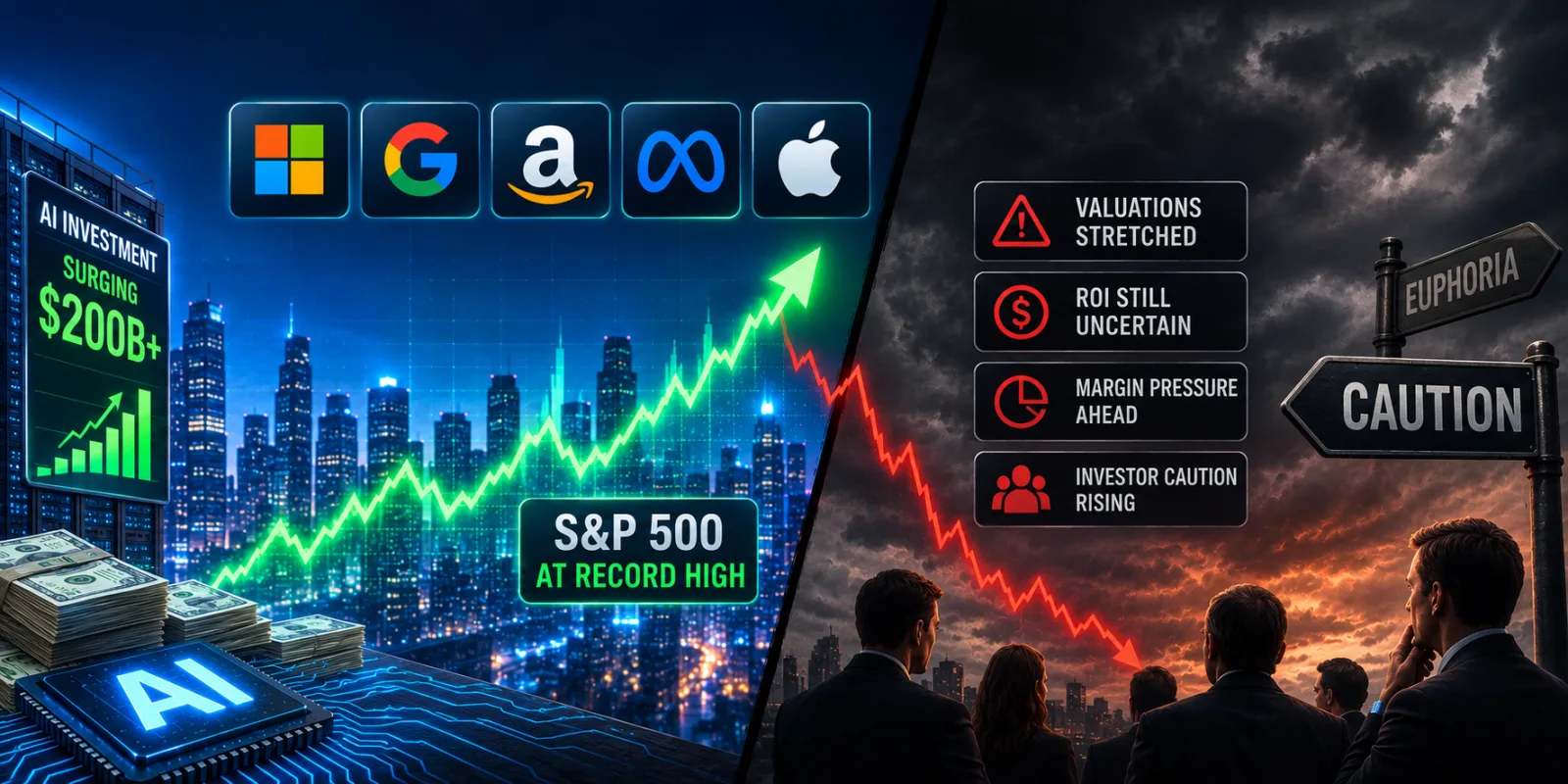
Equities took the news well. The S&P 500 had already logged a third straight weekly gain and a run of record closes before drifting back slightly on the Friday, and the whole advance was fuelled in large part by the fading case for higher rates (Yahoo Finance recap).
Why a hike, not a cut, was ever on the table#
Most of the past two years, investors assumed the Fed's next move would be down. That assumption broke this spring. Kevin Warsh became the seventeenth chair of the Federal Reserve in May, returning to the institution where he had served as a governor from 2006 to 2011 (biography). He arrived with a hawkish reputation and a distaste for the long, choreographed guidance the Fed had used under Jerome Powell. His policy statements are shorter, and he has repeatedly refused to tell markets what he will do next.
The backdrop made his caution look reasonable. Inflation has now run above the Fed's 2% target for more than five years, pushed higher last year by an energy shock tied to conflict in the Middle East. The federal funds rate has sat in a range of 3.5% to 3.75% since the start of the year, held there through five consecutive meetings. At the June meeting, the Fed's own projections, the so-called dot plot, showed a median expectation of 3.8% by year end, which implied one more increase rather than a reduction.
The clearest signal came in July. The Fed held rates again, but three regional presidents dissented, Beth Hammack of Cleveland, Neel Kashkari of Minneapolis and Lorie Logan of Dallas, each voting to raise borrowing costs by a quarter point. It was the first time since 2016 that three officials had broken ranks in the same direction (CNN report). Warsh, asked about the split, said he had "asked for a good family fight and I got one." Against that setting, a September hike was a live threat, not a tail risk. Last week's data is what took it off the boil.
What it means across the market#
In fixed income, the effect showed up first. The yield on the ten-year Treasury note has been trading around 4.7%, close to its highest level in more than a year and a half. Yields at that level reflect a market that still respects the Fed's willingness to stay restrictive. If the hike is genuinely off the table, the ceiling on yields is lower than it looked a week ago, which tends to support bond prices.
In currencies, the dollar softened after the reports, slipping as retail sales and sentiment disappointed. This is where the global reach becomes obvious. A weaker dollar loosens financial conditions everywhere, because so much cross-border debt and trade is priced in it. It has been one of the engines behind this year's rotation into emerging-market equities, which have outperformed as investors look beyond the United States.
Commodities complicate the picture. Brent crude has been trading near 88 dollars a barrel, still carrying a risk premium from tension around the Strait of Hormuz even after supply concerns eased earlier in the summer. Expensive energy is exactly the sort of thing that could revive the inflation the market has just decided to stop worrying about. That is the quiet contradiction underneath the current calm.
For equity investors, lower rate expectations lift the present value of future company earnings, which is part of why the S&P 500 kept setting records into last week. For banks and quantitative traders, the change reshapes the entire rates curve that sits underneath swaps, options and carry trades.
How markets actually price a Fed decision#
It is worth being precise about what "the market expects a 30% chance of a hike" really means, because the phrase gets thrown around loosely.
The number comes from federal funds futures, contracts traded on the CME that settle against the average overnight interest rate the Fed targets. Because those contracts pay out based on where rates actually land, their prices encode the collective bet of everyone trading them. The FedWatch tool simply translates those prices into probabilities. When it says a hike is a 30% chance, it means futures are priced as if a rise were roughly one outcome in three.
These probabilities are not forecasts in the ordinary sense. They are risk-adjusted market prices, and they move the instant new information arrives, which is why a single inflation print can swing them by twenty points in an afternoon. They are also imperfect. Futures prices bundle in a small premium for risk and liquidity, so the "probability" is really an approximation. Still, they are the cleanest real-time read on what serious money believes.
The dot plot works differently. Each policymaker marks where they think rates should sit at the end of the year, and the Fed publishes the anonymised spread. It shows intentions rather than market bets, and under Warsh those intentions have been unusually scattered, which is part of why the futures market has had to do so much of the interpreting on its own.
What the consensus might be getting wrong#
The comfortable reading is that inflation is beaten and the Fed can relax. That view rests on assumptions worth poking at.
The first is that one soft month is a trend. Retail sales are volatile, and a chunk of July's drop reflected the timing of promotions and lower fuel spending rather than a collapse in demand. Inflation at 3.4% is cooler, but it is still well above target, and it has been sticky for years. A hawkish chair who watched three colleagues vote to hike is unlikely to declare victory on the strength of a fortnight.
The second assumption is that oil behaves. With Brent still carrying a geopolitical premium, an escalation around the Strait of Hormuz could push energy prices up and drag headline inflation with them. That would put the hike debate straight back on the table.
There is also a governance wrinkle. Warsh has deliberately stopped giving forward guidance, which means the market has less of a safety rail than it did under Powell. That raises the odds of a sharp repricing if the September meeting surprises in either direction. Traders leaning hard on a benign outcome are, in effect, betting that a chair who prizes optionality will not use it.
Echoes of 2016, and something genuinely new#
Comparisons help calibrate how big this moment is. The last time three Fed officials dissented together in the same direction was 2016, a period when the central bank was cautiously tightening after years near zero. The parallel is imperfect but instructive: then, as now, a divided committee argued in public about whether the economy could take higher rates.
What is new is the leadership style. Warsh's refusal to guide markets is a real break from a decade in which the Fed treated communication as a policy tool in its own right. Whether this is a lasting structural change or a personal preference that fades under pressure is one of the open questions of the year.
The timing sharpens all of it. On 27 to 29 August, the Federal Reserve Bank of Kansas City hosts its annual Jackson Hole symposium, and Warsh will give his first keynote there as chair. This year's theme, financial innovation and the future of payments, points at digital money and central bank digital currencies rather than the rate path. Even so, every word he says about the economy will be parsed for clues. A week that began by pricing out a hike ends by waiting on the man who could price it back in.
Key takeaways#
- A week of soft US data, cooler July inflation at 3.4%, a 0.6% fall in retail sales and weak sentiment, has cut the odds of a September rate rise to about one in three and pushed any move into 2027 on some forecasts.
- The starting point was rare. Under new chair Kevin Warsh, the Fed had three officials voting for a hike in July, the first unified three-way dissent since 2016.
- The repricing rippled outward: ten-year yields near 4.7% look capped, the dollar softened, and emerging markets kept their edge.
- The market's confidence rests on shaky assumptions, chiefly that one soft month is a trend and that oil, still carrying a war premium near 88 dollars, stays contained.
- Warsh's first Jackson Hole address on 28 August is the next catalyst, made riskier by his refusal to offer forward guidance.
Frequently asked questions#
Is the Federal Reserve about to cut interest rates? Not according to current market pricing. The debate this year has been about whether to hold or hike, not whether to cut. After last week's data, markets moved towards a prolonged hold, and Goldman Sachs expects no cut until 2027. This is an estimate, not a certainty.
What is the current US interest rate? The federal funds target range has been 3.5% to 3.75% since the start of 2026, unchanged across five consecutive meetings.
Who is Kevin Warsh? He became the seventeenth chair of the Federal Reserve in May 2026, having previously served as a Fed governor from 2006 to 2011. He is regarded as hawkish and has moved the Fed away from detailed forward guidance.
Why does a US rate decision affect markets in other countries? Because the dollar is the currency of global trade and borrowing. When US rate expectations fall, the dollar tends to weaken, which loosens financial conditions abroad and often supports emerging-market assets.
What does "30% chance of a hike" actually mean? It is derived from federal funds futures prices via the CME FedWatch tool. Those prices reflect where traders collectively expect the Fed's target rate to settle, translated into a probability. It is a risk-adjusted market signal, not an official forecast.
Why does the Jackson Hole symposium matter? It is an annual gathering of central bankers and economists hosted by the Kansas City Fed. The Fed chair's keynote is closely watched for policy signals. Warsh delivers his first address as chair on 28 August.
Could the hike come back onto the table? Yes. Inflation remains above target, and oil still carries a geopolitical premium. A hot inflation print or an energy shock could revive expectations of a rise. This is a risk, not a prediction.
References#
All figures reflect reporting available on 17 August 2026 and are drawn from primary sources where possible.
- US July CPI report, 3.4% annual inflation: CNBC; primary data from the Bureau of Labor Statistics.
- US July retail sales, down 0.6%: US Census Bureau; analysis via CNN Business.
- September rate-hike odds falling to about 30%: Seeking Alpha.
- Goldman Sachs calling a September hike "very unlikely" and expecting a hold through 2026: CoinDesk; Yahoo Finance.
- Kevin Warsh as Fed chair since May 2026: Chase; biography; semiannual testimony to Congress.
- Federal funds range of 3.5% to 3.75% and June dot plot: CNBC, June decision; CNBC, June projections.
- July FOMC hold and three dissents favouring a hike: CNBC; CNN Business.
- Ten-year Treasury yield near 4.7%: Trading Economics.
- Dollar softening on weak US data: TradingView.
- Brent crude near 88 dollars and Middle East supply context: Trading Economics; Al Jazeera.
- S&P 500 third straight weekly gain and record run: CNBC; Yahoo Finance.
- Emerging-market rotation on a weaker dollar: Capital Group.
- Jackson Hole 2026 symposium, 27 to 29 August: Federal Reserve Bank of Kansas City.
This article is for information only. It is not investment advice, a recommendation, or a forecast of guaranteed outcomes. Market interpretations and forward-looking statements are clearly identified as such and reflect conditions as of 17 August 2026.