The Gold-Stocks Reset: How One Soft Inflation Print Lifted Both to Records
Cooler July inflation and a weak jobs report pushed Fed rate-hike odds lower, sending the S&P 500 to new records and gold back above $4,400 in the same week. Here is what it means for markets.

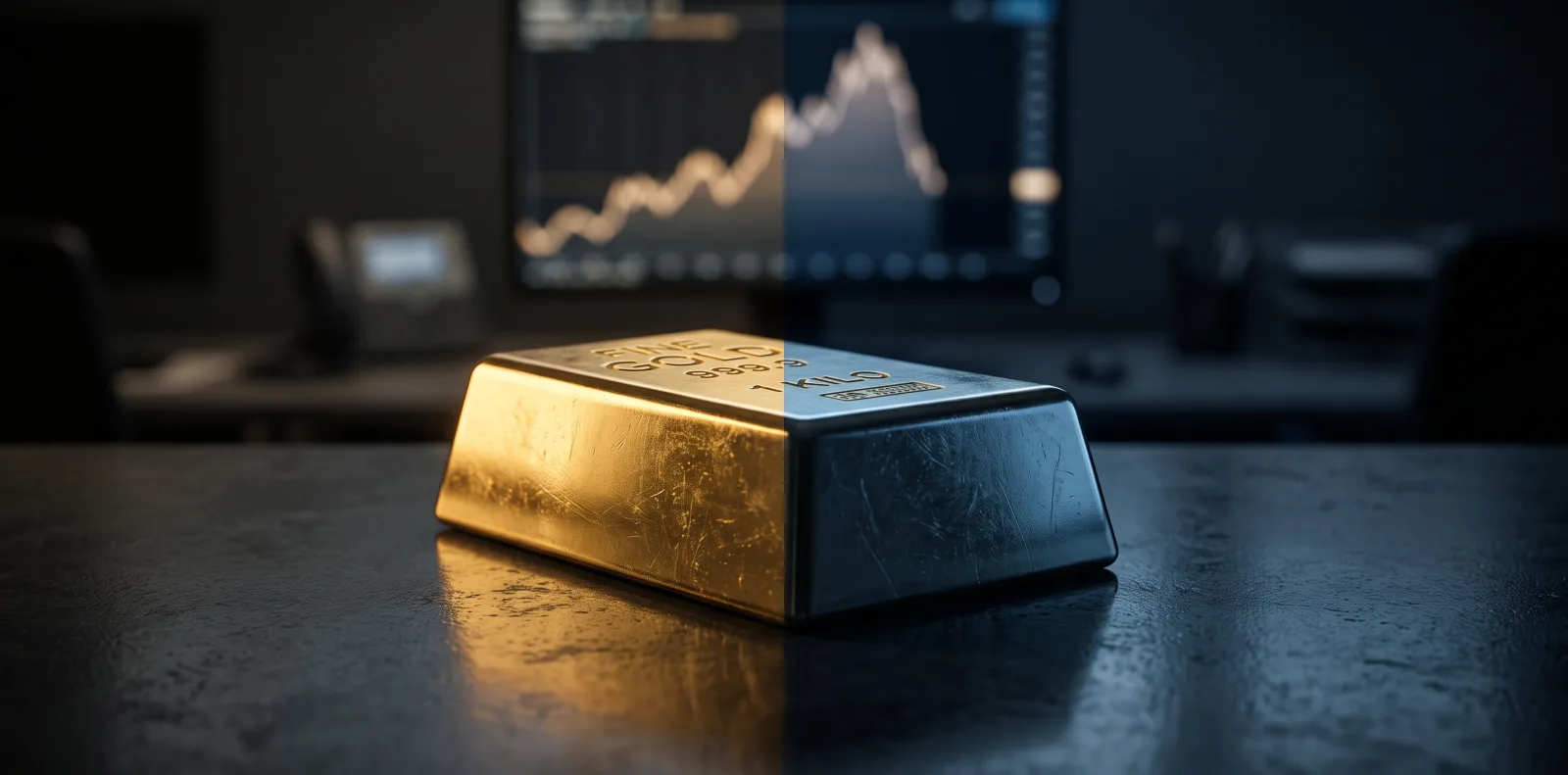
Two assets that usually take turns leading the market moved in lockstep this week, and both ended it at or near record territory. American shares climbed to fresh all-time highs while gold pushed back above $4,400 an ounce. The proximate cause was a single number: a cooler-than-feared reading on July consumer prices. For anyone building a portfolio, the more interesting question is why a data point that helped equities did not, this time, hurt the classic hedge against equities.
What happened this week#
On 12 August the US Bureau of Labor Statistics reported that headline consumer prices rose just 0.1% in July, leaving the annual rate at 3.4%, down a notch from 3.5% in June, with core inflation easing to 2.5% (CNBC; BLS). It followed a jarring employment report a week earlier: the economy shed 23,000 jobs in July against forecasts for an 80,000 gain, and the BLS revised the prior two months down by a combined 103,000 (CNBC; CoinDesk).
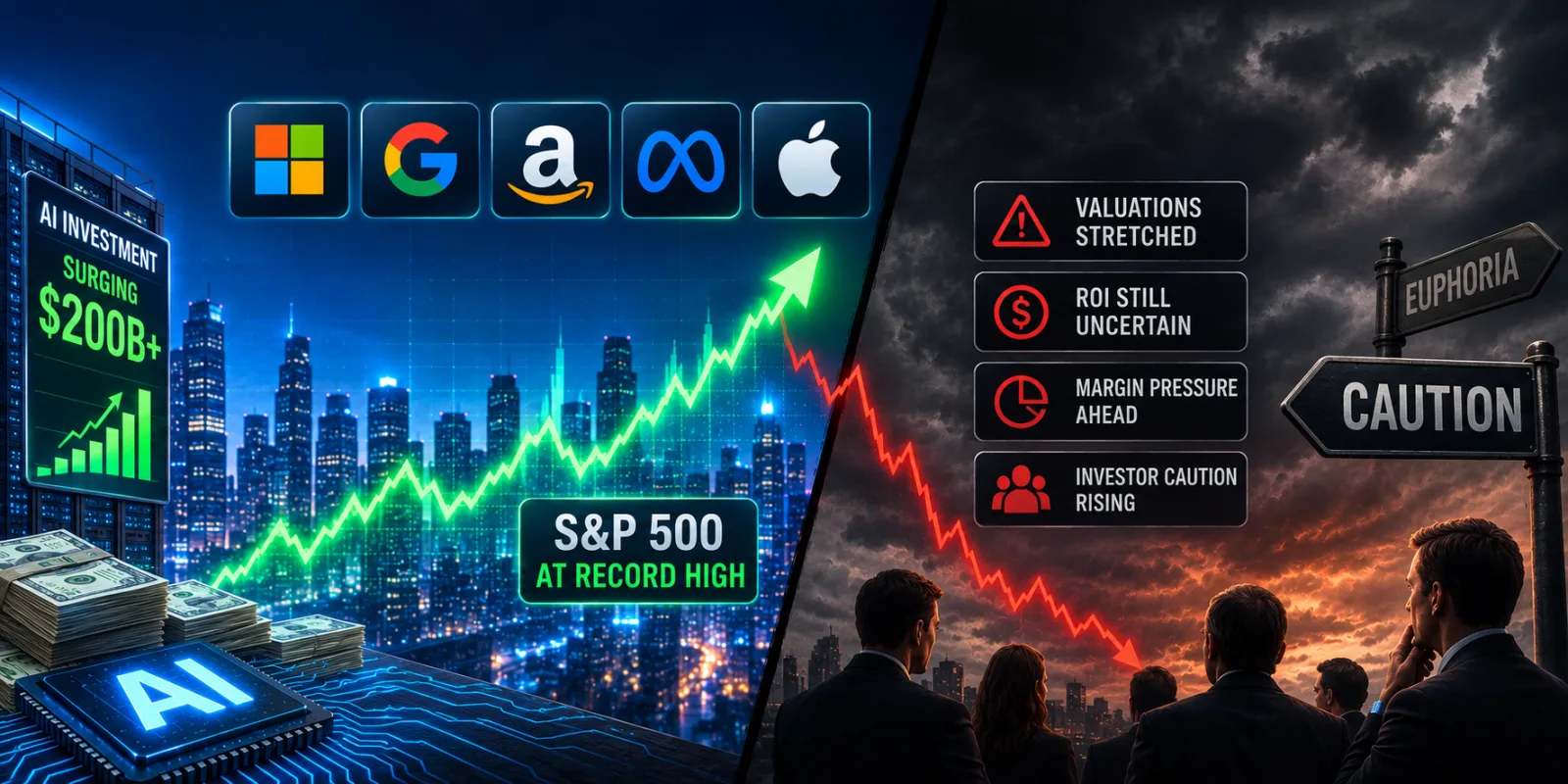
The market read the two prints the same way. Odds of a Federal Reserve rate rise in September, which had been near 55%, tumbled towards 31% (CNBC). Equities took that as a green light: the S&P 500 closed above 7,800 for the first time and printed a record intraday high near 7,815 (Investing.com). Gold, which had opened the month at its highest level since early June, settled the week near $4,388, up more than 10% on the month (Yahoo Finance; NAI 500). Gold-mining shares did even better, part of a $206bn surge in mining-sector market value in August (IndexBox).
Why cheaper money helps both shares and gold#
To see why one report lifted both, start with what a central bank policy rate actually does. The Fed sets the price of overnight money. That rate ripples outward into what savers earn on cash and short-dated government bonds, and into the rate used to discount future company profits back to a value today.
Equities are, in effect, a claim on future earnings. When the expected path of interest rates falls, those future earnings are discounted less harshly, so their present value rises. Lower rates also reduce borrowing costs for companies and consumers, supporting the economy that generates the earnings in the first place. That is the textbook channel from softer data to higher share prices.
Gold works through a different mechanism that happens to point the same way. Bullion pays no coupon and no dividend; holding it means forgoing the yield you could earn on cash or Treasuries. Economists call that forgone yield the opportunity cost of gold. When rate-rise odds fade, that opportunity cost falls, and a non-yielding asset becomes relatively more attractive. A softer growth signal also strengthens gold's appeal as insurance. So the same shift in expectations that flattered equities removed a headwind for gold.
The two normally diverge because they are pulled by different fears. Gold tends to shine when investors worry about recession, inflation running out of control, or financial stress, precisely the conditions that punish shares. This week was unusual because the news was ambiguous enough to feed both narratives at once: benign enough on inflation to comfort equity bulls, soft enough on growth to reassure gold buyers.
What it means across markets#
For fixed income, the repricing is the whole story. Softer data lowers the expected policy path, which tends to pull government bond yields down and lift bond prices. Lower real yields, the return on inflation-protected bonds, are the single most reliable tailwind for gold, which is why bullion and real yields so often move in opposite directions.
In equities, the move was not evenly spread. Beyond the mega-cap technology names that have led for two years, mid-cap and small-cap shares outperformed, and international markets firmed as the dollar steadied (Investing.com). A broadening rally, where gains spread beyond a handful of leaders, is historically associated with more durable bull markets, though it is no guarantee of one.
For commodities more broadly, the dollar is the swing factor. Most raw materials are priced in dollars, so a softer currency makes them cheaper for overseas buyers and tends to support prices. Silver joined gold's advance, trading above $64 an ounce (forex.com). Energy was the awkward exception: crude and petrol firmed on tensions around the Strait of Hormuz, a reminder that the same geopolitical risk supporting gold as a haven can also keep inflation stubborn (Seeking Alpha).
The engine under the gold price#
Rate expectations explain the week. They do not explain the year. Gold is up roughly 30% over twelve months, and the structural buyer behind that move is the official sector. According to the World Gold Council's Gold Demand Trends for the second quarter, published on 30 July, central banks added a net 289 tonnes of gold in the quarter, a 62% jump on a year earlier and the strongest second quarter in its records (World Gold Council; The National). Poland led, followed by Uzbekistan and China, while Russia and Turkey were net sellers (WGC, Central Banks).
The tell is that this buying continued even as prices fell during the quarter (goldsilver.com). Price-insensitive demand of that kind behaves differently from a speculative flow. It reflects reserve managers diversifying away from the dollar and hedging geopolitical risk, motives that do not reverse when the monthly chart dips. That is the floor beneath the market that private investors have been layering momentum on top of.
Private money is now returning too. Global gold exchange-traded funds took in roughly $3bn in July, reversing two months of outflows (SSGA Gold Monitor).
The case for caution#
None of this makes the week's move a one-way bet, and the enthusiasm deserves scrutiny. The first caveat is that both records rest on a forecast, not a fact. Markets have priced a lower chance of a September rate rise; they have not been handed one. A single firm inflation print, or a rebound in hiring, could reverse the repricing and pressure shares and gold together, just as this week lifted them together. The minutes of the last Fed meeting are due shortly and could shift the tone again (NAI 500).
Second, inflation is not vanquished. At 3.4% it sits well above the Fed's 2% goal, shelter drove two-thirds of the July rise, and energy is climbing again on Middle East tensions (NBC News). A fresh energy shock would complicate any dovish pivot.
Third, gold's own history counsels humility. Bullion traded above $5,000 earlier in 2026 before falling sharply, and the current level near $4,400 is a ten-week high, not an all-time high (Fortune). Crowded trades unwind violently, and the ETF outflows earlier in the summer showed how quickly sentiment can turn. Finally, the correlation that defined this week is temporary by nature. The reason to hold gold alongside equities is that they usually diverge; weeks when they rise together are pleasant but should not be mistaken for the norm.
Echoes of past resets#
Is this a new regime or a familiar pattern? The honest answer is a bit of both. Episodes where easier policy lifts nearly every asset at once are a recurring feature of late-cycle markets, most memorably the "everything rally" that followed the Fed's 2019 pivot. In that sense this week is cyclical rather than novel.
What looks more structural is the official sector's appetite for gold. Sustained, price-insensitive central-bank buying of this scale is not something the market saw in the 1990s or 2000s, when many central banks were net sellers. Reserve managers rebuilding gold holdings as a hedge against currency and geopolitical risk represents a genuine shift in the demand base rather than a passing trade (World Gold Council press release). The near-term correlation between shares and gold is a cyclical accident; the strength of the gold bid underneath it is the structural story.
Key takeaways#
- A cooler July inflation print (3.4% headline) and a weak jobs report cut the odds of a September Fed rate rise, lifting the S&P 500 above 7,800 and gold above $4,400 in the same week.
- Lower expected rates help shares by raising the present value of future earnings and help gold by cutting the opportunity cost of holding a non-yielding asset.
- The rally broadened beyond mega-cap tech into small- and mid-caps, a pattern historically linked to more durable advances.
- Record central-bank buying, 289 tonnes in the second quarter, is the price-insensitive floor under gold, distinct from the week's rate-driven move.
- The gold-equities correlation is temporary; sticky inflation, an energy shock, or a firmer data print could reverse it in either direction.
Frequently asked questions#
Why did gold and shares rise together when they usually move apart? Because the week's data was ambiguous enough to satisfy both camps: soft enough on inflation to reassure equity investors, soft enough on growth to lower rate expectations and reduce the opportunity cost of holding gold.
What is the "opportunity cost" of gold? Gold pays no interest or dividend. The yield you give up by holding it instead of cash or bonds is its opportunity cost. When interest-rate expectations fall, that cost falls, and gold becomes relatively more appealing.
Why does a weaker jobs report push share prices up? Weaker data lowers the expected path of interest rates. Lower rates reduce the discount applied to future company earnings, raising their present value, and cut borrowing costs, which tends to support prices even as it signals a softer economy.
Are central banks really still buying at these prices? Yes. The World Gold Council reports central banks bought a net 289 tonnes in the second quarter of 2026, a record for the period, and continued buying even as prices fell during the quarter.
Is gold at an all-time high? No. Gold traded above $5,000 earlier in 2026 before falling. The level near $4,400 is a roughly ten-week high, not a record.
What could break the equities-gold correlation? A firmer inflation print or a rebound in hiring could lift rate expectations, pressuring both. Alternatively, a growth scare could send equities down while gold rises, restoring their usual inverse relationship.
Is any of this investment advice? No. This article explains market developments and is not a recommendation to buy or sell any asset. Forward-looking statements about rates or prices are estimates, not certainties.
References#
- US CPI July 2026, CNBC
- Consumer Price Index Summary, BLS
- July 2026 CPI: inflation remained stubborn, NBC News
- Jobs report July 2026, CNBC
- US lost 23,000 jobs in July, CoinDesk
- Gold prices and Fed rate-hike odds, CNBC
- Gold holds above $4,400, NAI 500
- Gold highest since early June, Yahoo Finance
- S&P 500 record high, gold rebounds, Investing.com
- Mining stocks surge $206bn in August, IndexBox
- Gold Demand Trends Q2 2026, World Gold Council
- Q2 2026 central-bank demand, World Gold Council
- Central banks' gold rush hits record in Q2, The National
- Central banks bought 289 tonnes as prices fell, goldsilver.com
- Gold market resilience, momentum cools in Q2, World Gold Council press release
- Monthly Gold Monitor, August 2026, State Street (SSGA)
- Gold-S&P 500 reset, Seeking Alpha
- Gold, silver price forecast, forex.com
- 1-Minute Market Report, 15 Aug 2026, Seeking Alpha
- Current price of gold, 4 Aug 2026, Fortune
This article is for information only and does not constitute investment advice. Figures cited reflect sources available at the time of writing; market interpretation and forward-looking statements are clearly identified as estimates rather than certainties.