Gold Price 2026: Central Banks Hoard as Warsh's Fed Turns Hawkish
Gold slid to about $4,458 after Fed chair Kevin Warsh's hawkish Jackson Hole speech, yet central banks bought a record 289 tonnes in Q2. Here is what the split means for markets.
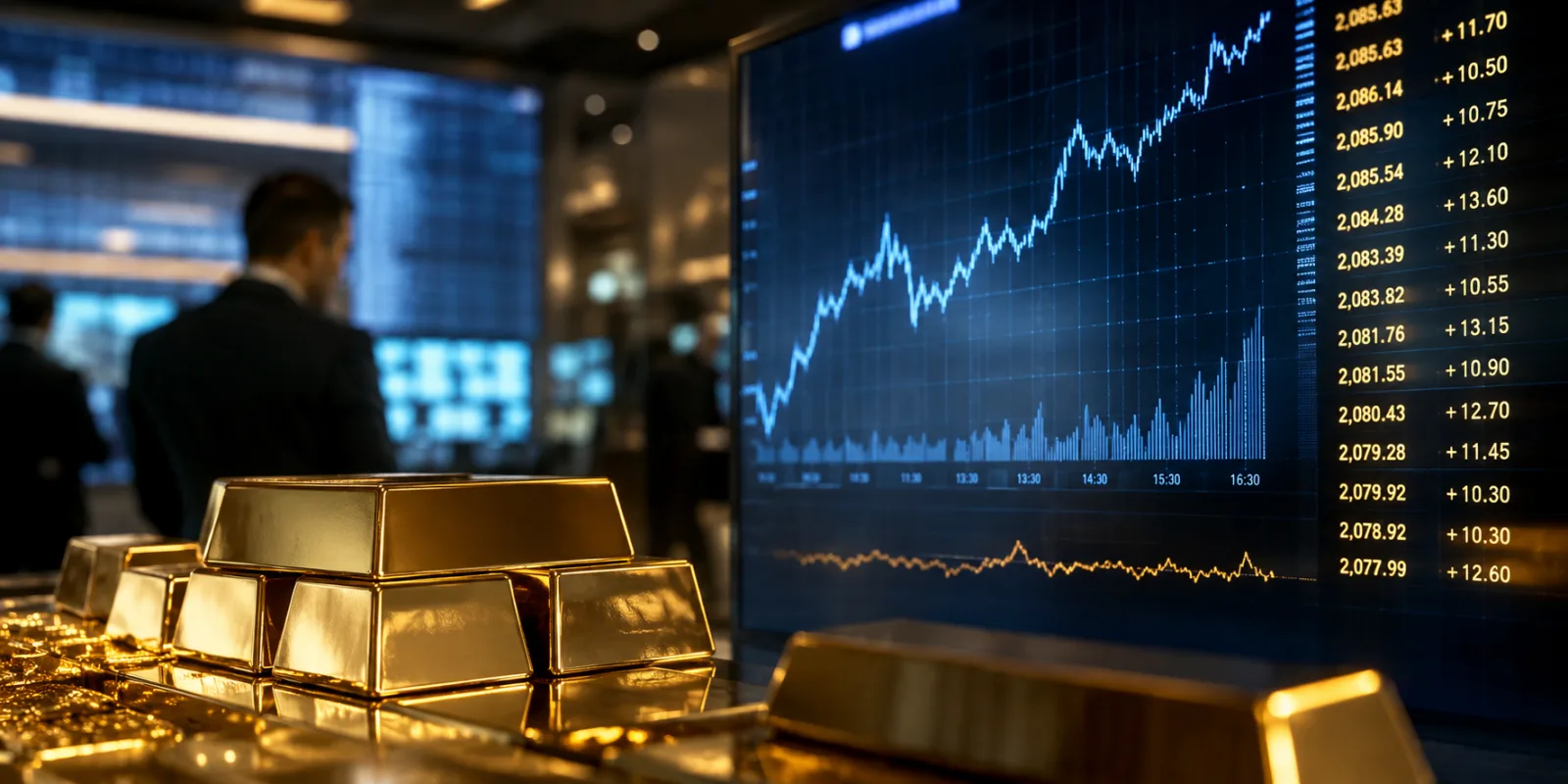
For most of 2026 the quiet winner across markets has not been an artificial-intelligence stock. It has been a metal that pays no interest and does nothing. Gold rebounded about 11% during August after a brutal spring, and central banks kept buying it in record volumes even while the price was falling. Then, in the last week of the month, gold tripped. Federal Reserve chair Kevin Warsh used the Jackson Hole stage to warn that inflation was still too hot, traders suddenly began pricing an interest-rate rise, and the metal slid to around $4,458 an ounce. The drop was small. What it exposed was not.
What actually happened#
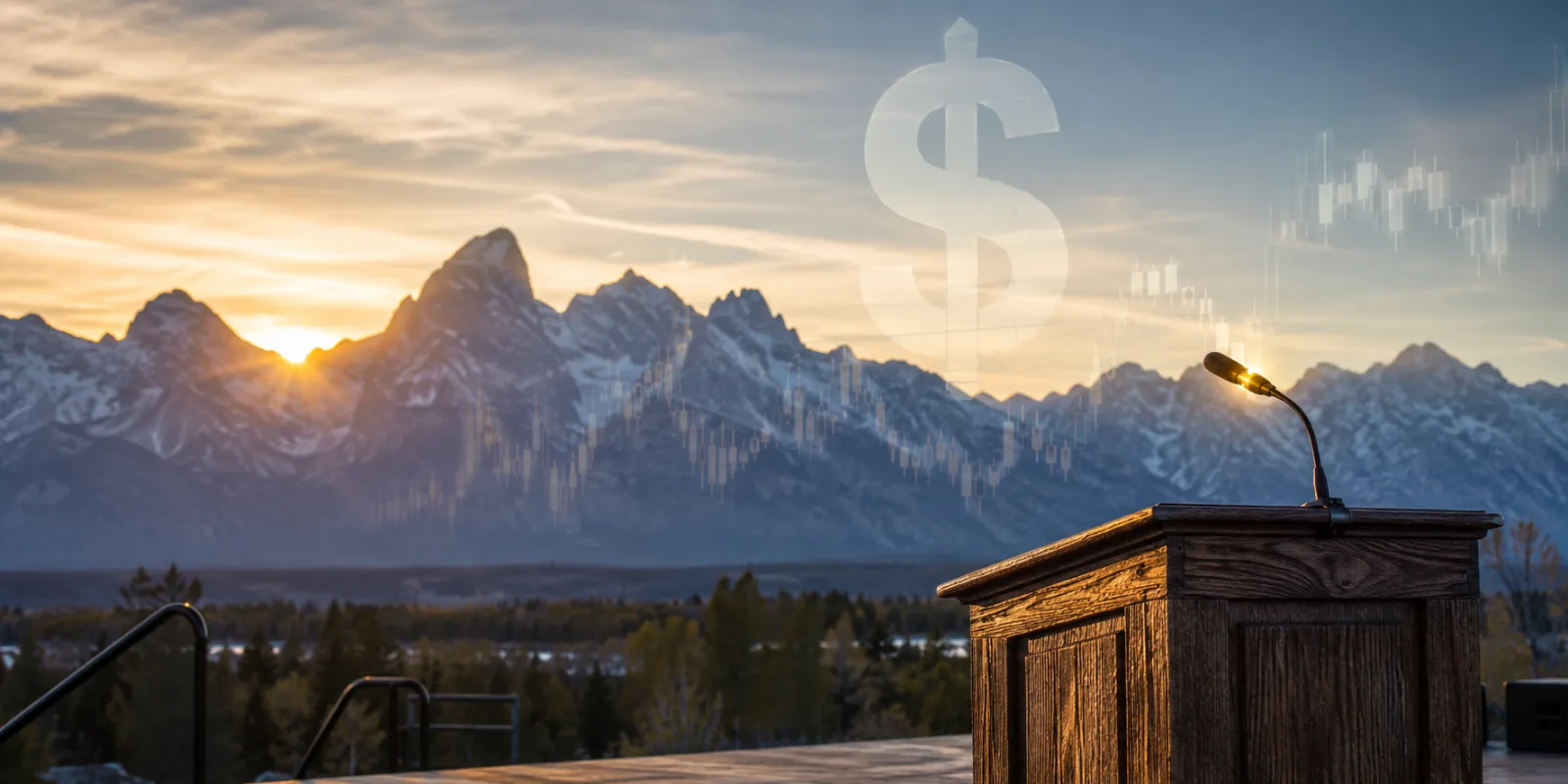
On 28 August, at the Kansas City Fed's annual symposium in Jackson Hole, Warsh gave a noticeably more hawkish reading of inflation than he had after the July meeting. He called core inflation, running near 3.7% on the Fed's preferred PCE measure, a concern, and said elevated prices should be the central bank's main focus. He also refused to offer forward guidance about the next move, which left the September decision wide open.
Markets did the maths quickly. Within minutes of the speech, traders were pricing a roughly 56% chance of a quarter-point rate rise at the mid-September meeting, to a target range of 3.75% to 4.00%. That would be a hike, not the cut many had expected earlier in the year. Gold, which hates higher interest rates, fell about 3% on the week. American equities softened too, with the S&P 500 easing to 7,711.76 and the Nasdaq to 26,402.42 on the Friday.
Here is the awkward part. That same week sat on top of fresh data showing the opposite behaviour from a very different kind of buyer. The World Gold Council reported that central banks added a net 289 tonnes of gold in the second quarter, up 62% on a year earlier and the strongest second quarter in its records. They did this while the gold price was posting its steepest quarterly fall in a decade. One set of buyers sells on a hawkish speech. The other buys the dip on a decades-long view. That split is the story.
The two engines that move the gold price#
Gold has no earnings, no coupon and no dividend. To understand why it moves, you need two ideas.
The first is the real yield, which is the interest rate on a safe bond after subtracting expected inflation. Because gold pays nothing, its main rival is a government bond that pays interest. When real yields rise, holding gold costs you the return you gave up by not owning that bond. That giving-up is called opportunity cost, and it is why a hawkish Fed, which pushes rates up, tends to weigh on gold. Warsh's speech lifted the odds of higher rates, so the opportunity cost of holding gold went up, and the price went down.
The second engine is demand from central banks, and it follows a different logic. A central bank holds foreign reserves so it can defend its currency, pay for imports and weather a crisis. For decades those reserves sat mostly in US dollars and US Treasury bonds. Since Russia's reserves were frozen by Western sanctions in 2022, more central banks have wanted assets that no other government can switch off. Gold fits, because it carries no counterparty. That shift toward holding a wider mix of assets is called reserve diversification, and the slow move away from the dollar's dominance is often labelled de-dollarisation.
These two engines do not care about the same things. A trader watches the next inflation print and the next Fed meeting. A reserve manager in Warsaw or Beijing watches the next decade. In 2026 they have been pulling gold in opposite directions at the same time.
Who is buying, and how much#
The second-quarter buying was broad rather than the work of one giant. Poland led again, and China kept adding at a steady pace. The table below uses the World Gold Council's reported figures for the quarter.
| Buyer | Q2 2026 net purchase (tonnes) | Reported total holdings |
|---|---|---|
| National Bank of Poland | 51 | 632t by end-June |
| People's Bank of China | 33 | 2,346t |
| Central Bank of Uzbekistan | 16 | not disclosed |
| National Bank of Kazakhstan | 15 | not disclosed |
| Central Bank of Jordan | 6 | not disclosed |
| Czech National Bank | 6 | not disclosed |
| Central Bank of Russia (seller) | −22 | not disclosed |
Source: World Gold Council, Gold Demand Trends Q2 2026.
Two caveats matter. First, the half-year total tells a softer story: net demand of 345 tonnes was the lowest first half since 2022, dragged down by heavy first-quarter selling from Turkey, Russia and Azerbaijan. Second, a chunk of official buying goes unreported until much later, so the true figure is probably higher than the published one. Even so, sentiment is firm. In the Council's latest survey, 89% of reserve managers expected global gold reserves to rise over the next year, and a record 45% expected to add to their own.
What it means across markets#
A single asset rarely sits at so many crossroads. Consider the ripples if the Fed does raise rates in September.
Equities would feel it through the discount rate, the interest rate used to value a company's future profits in today's money. Higher rates make those future profits worth less now, which hurts long-duration growth and technology shares most. Gold-mining shares are a special case, because a miner's profit is the gap between the gold price and its costs, so miner earnings move more than the metal itself in either direction. That leverage is why gold-mining stocks tend to amplify the gold cycle.
In foreign exchange, a more hawkish Fed usually lifts the dollar, and a stronger dollar makes gold more expensive for buyers using other currencies, which can cap demand. In fixed income, the market that priced the rate-rise odds is the bond market itself, where higher expected rates push bond prices down and yields up. Commodities show the same macro cross-currents from a different angle: Brent crude has been trading near $87 a barrel while traders weigh Middle East supply risks, so energy and metals are both being repriced around the same rate story.
For institutional investors, gold's appeal is that it often moves independently of shares and bonds, which can steady a portfolio when both fall together. For quantitative and systematic traders, the sharp move after Warsh's speech is the kind of event that flips trend-following models from long to short in a hurry, which can make the initial move larger. None of this is a recommendation to trade. It is a map of where the pressure lands.
Valuing an asset that yields nothing#
If gold has no cash flow, how do professionals put a number on it? The honest answer is that they price it relative to the alternative. Think of gold as a bond with no coupon and no maturity. Its attraction rises when the real return on actual bonds falls, and fades when that real return climbs. Most bank models therefore treat the real yield and the dollar as the main short-term drivers, then layer on flows: how much metal is moving into exchange-traded funds, and how heavily speculative traders are already positioned.
Central-bank demand breaks that tidy framework in one important way. A reserve manager buying for strategic reasons is far less sensitive to price than a hedge fund. When a price-insensitive buyer takes a steady share of annual supply off the market, it raises the floor under the price even when yields are unhelpful. That is roughly what 2026 has shown. Gold fell hard in the spring on rate fears, yet the official bid kept the decline from turning into a rout, and demand proved resilient through the sell-off.
Reasons for caution#
The bullish case has real weaknesses. The clearest is that even the biggest bank on the street cannot see far ahead. JPMorgan told clients in February that gold would reach about $6,300 by year-end. It later trimmed the number, and at one point cut its target by roughly a quarter as demand softened, before settling on a still-bullish call near $6,000. Those are forecasts, not facts, and the swings show how little visibility anyone has. Treat every price target in this article as an estimate that can be wrong.
There are structural doubts too. Unreported official buying makes the demand data opaque, so the market is partly trading on numbers that get revised months later. The half-year total was the weakest since 2022, which hardly screams runaway demand. And the near-term policy backdrop is now openly hostile: if Warsh follows through and raises rates, real yields rise and the opportunity cost of holding gold rises with them. A crowded speculative position can then unwind fast, which is what the 3% weekly drop hinted at. The competing view is simple and worth stating plainly. Bears argue that gold near record levels is priced for a crisis that may not arrive, and that a resilient economy with sticky inflation is a reason to hold cash earning 4%, not metal earning nothing.
A cycle, or a genuine change#
Gold has had famous runs before. It soared through the inflationary 1970s, peaked after the 2011 debt crises, and jumped again in the 2020 pandemic. Each of those was driven mainly by investors and fear, and each faded when the fear did. What looks different this time is the identity of the marginal buyer. In the earlier episodes, private investors set the price at the margin. In 2026, official institutions are doing a lot of the heavy lifting, and they are buying for strategic reasons that outlast any single Fed meeting.
That points to a structural change rather than a normal cycle. If reserve managers keep shifting even a few percentage points of their holdings from dollars into gold, that is a slow, persistent bid that does not depend on the next inflation report. It would not stop gold from falling when rates rise, as the past week showed. But it does change the floor. The cyclical force and the structural force can both be true at once, which is exactly why the price action looks so contradictory right now.
Key takeaways#
- Central banks bought a record 289 tonnes of gold in the second quarter, up 62% year on year, even as the price was falling.
- Fed chair Warsh's hawkish Jackson Hole speech pushed traders to price a possible September rate rise, knocking gold back about 3% to roughly $4,458.
- Gold is caught between a cyclical headwind (higher real yields) and a structural tailwind (strategic reserve buying).
- Bank price targets have swung wildly this year, a reminder that forecasts are estimates, not certainties.
- The marginal buyer has changed. Official demand, not private fear, is doing more of the work than in past gold rallies.
Frequently asked questions#
Why does gold fall when interest rates rise? Gold pays no interest. When safe bonds pay more, the return you give up by holding gold instead goes up. That lost return is the opportunity cost, and it makes gold less attractive.
What did Warsh actually say at Jackson Hole? He called inflation near 3.7% a concern, said elevated prices should be the Fed's main focus, and declined to signal the next move, which markets read as leaving a September rate rise on the table. Source: CNBC.
Why are central banks buying so much gold? To diversify reserves and hold an asset no other government can freeze. Appetite rose after Western sanctions froze Russian reserves in 2022. Poland and China have led recent buying, per the World Gold Council.
Is gold going to $6,000? JPMorgan has a year-end target near that level, but its own forecast has swung by hundreds of dollars this year. That is an estimate, not a prediction you can bank on. Source: JPMorgan Global Research.
How do gold-mining shares differ from the metal? A miner earns the gap between the gold price and its costs, so its profit swings more than the price of gold. That makes mining shares a geared bet on the metal in both directions.
Does gold help a portfolio? It often moves independently of shares and bonds, which can cushion a portfolio when both fall. That is a general property, not advice, and gold can still lose value sharply, as it did this spring.
Glossary#
Real yield: the interest rate on a safe bond after subtracting expected inflation. Rising real yields usually hurt gold.
Opportunity cost: the return you give up by choosing one asset over another. For gold, it is the interest you forgo by not holding a bond.
PCE inflation: Personal Consumption Expenditures, the inflation measure the Federal Reserve watches most closely.
Forward guidance: a central bank's signals about its likely future policy. Warsh declined to give any, leaving September uncertain.
Basis point: one hundredth of a percentage point. A 25 basis-point move equals 0.25%.
Reserve diversification: a central bank spreading its official reserves across more assets, such as gold, rather than concentrating in one currency.
De-dollarisation: the gradual reduction in the US dollar's share of global reserves and trade.
Discount rate: the interest rate used to convert a company's future profits into a value today. Higher rates lower that value.
References#
- World Gold Council, Gold Demand Trends Q2 2026: Central Banks (30 July 2026).
- World Gold Council, Central Bank Gold Reserves Survey 2026.
- CNBC, Fed chair Warsh warns on inflation at Jackson Hole (28 August 2026).
- The Washington Post, Fed chair Warsh, concerned about inflation, says bank may have 'work to do' (28 August 2026).
- Morningstar, Warsh sounds hawkish, but will there be a September rate hike?
- CNBC, Stock market news for Aug. 28, 2026.
- Trading Economics, Gold price and Brent crude oil.
- eToro, Gold rebounds more than 10% in a month.
- Kitco News, Gold demand proves resilient despite Q2 sell-off (30 July 2026).
- Kitco News, Gold to reach $6,300 by year-end 2026, J.P. Morgan.
- GoldSilver, JPMorgan cut its gold forecast by 25%.
- J.P. Morgan Global Research, Gold price predictions for 2026 and 2027.
This article is for information only. It is not investment advice, a recommendation, or a forecast you should rely on. Figures described as targets or forecasts are estimates and may prove wrong.